
Kindergarten Spelling Words PDF: A Comprehensive Guide (Updated 04/13/2026)
Navigating early literacy demands accessible resources. Printable PDFs offer structured lists‚ aiding parents and educators. These documents streamline spelling practice‚ fostering foundational skills for young learners.
Embarking on the journey of kindergarten spelling is a pivotal step in a child’s literacy development. It’s a time when young learners begin to decode the relationship between sounds and letters‚ transitioning from pre-reading skills to actively constructing written words. This foundational stage isn’t about rote memorization‚ but rather building a phonetic awareness that will underpin their future reading and writing abilities.
Understanding that kindergarteners are at varying levels of readiness is crucial. Some children may arrive already recognizing some letters and sounds‚ while others are just beginning this exploration; Therefore‚ a flexible and multi-sensory approach is key. Utilizing kindergarten spelling words PDF resources provides a structured yet adaptable framework for instruction.
These PDFs often categorize words by phonetic patterns – short vowels‚ consonant blends‚ and digraphs – allowing educators and parents to tailor lessons to individual needs. The goal isn’t perfection‚ but progress; encouraging attempts and celebrating effort are paramount. Remember‚ early spelling is about building confidence and a love for language.
Why Use PDF Spelling Lists?
PDF spelling lists offer unparalleled convenience and accessibility for kindergarten educators and parents. Their digital format allows for easy printing‚ sharing‚ and storage‚ eliminating the need for bulky workbooks or handwritten lists. This portability is invaluable for reinforcing learning both at school and at home‚ creating a consistent learning environment.

Furthermore‚ PDFs are often designed with clear‚ age-appropriate fonts and layouts‚ minimizing visual distractions for young learners. Many kindergarten spelling words PDF resources are categorized by skill level or phonetic pattern‚ enabling targeted practice. This focused approach ensures children are challenged appropriately‚ building confidence as they master each new concept.
The cost-effectiveness of PDFs is another significant advantage. Numerous free and affordable options are readily available online‚ making quality spelling resources accessible to all. They also facilitate easy customization – allowing teachers to adapt lists to suit specific classroom needs or individual student requirements.
The Importance of Early Spelling Skills
Early spelling skills are foundational for overall literacy development in kindergarten. Mastering basic spelling isn’t simply about memorizing letter sequences; it strengthens the crucial connection between sounds and symbols – a core principle of phonics. This understanding directly impacts reading comprehension and fluency‚ as children begin to decode words with greater ease.
Furthermore‚ successful spelling builds confidence and encourages children to express themselves through writing. When children feel capable of accurately representing their thoughts on paper‚ they are more likely to engage in creative writing activities and develop a positive attitude towards learning. Kindergarten spelling words PDF resources support this by providing structured practice.
Developing these skills early also lays the groundwork for future academic success. Strong spelling abilities are essential across all subject areas‚ not just language arts. A solid foundation in spelling contributes to improved communication skills and overall cognitive development‚ setting children up for a lifetime of learning.

Common Kindergarten Sight Words
Sight words‚ frequently encountered‚ require memorization. PDFs containing Dolch and Fry lists are invaluable tools. These lists accelerate reading fluency and comprehension skills.
What are Sight Words?
Sight words are commonly used words that children are encouraged to memorize as a whole‚ rather than sounding them out. These words often don’t follow typical phonetic rules‚ making decoding difficult for beginning readers. Recognizing these words instantly boosts reading speed and comprehension. Think of words like “the‚” “a‚” “is‚” “to‚” and “you” – they appear frequently in texts!
The goal isn’t to bypass phonics instruction‚ but to supplement it. Mastering sight words allows children to focus their cognitive energy on decoding more complex words. PDFs are incredibly useful for presenting these words in a structured and accessible format. They allow for repeated practice and easy tracking of progress.
Two prominent sight word lists are the Dolch list and the Fry list. The Dolch list categorizes words by grade level‚ starting with pre-primer and progressing through third grade. The Fry list organizes words by frequency‚ with the first being the most common. Utilizing both lists within kindergarten spelling PDFs provides a comprehensive approach to sight word acquisition‚ building a strong foundation for future reading success;
Dolch Sight Word List ⎼ Pre-Primer
The Dolch Pre-Primer list comprises just 40 essential words‚ forming the bedrock of early reading fluency. These high-frequency words are crucial for kindergarteners to recognize instantly‚ enabling them to comprehend simple sentences. Common words include “a‚” “I‚” “is‚” “the‚” “to‚” “and‚” “in‚” “it‚” “you‚” “that‚” and “he.”
PDFs containing this list are invaluable tools. They facilitate focused practice through activities like matching‚ sentence building‚ and word hunts. Repeated exposure‚ aided by visually clear PDFs‚ solidifies word recognition. Parents and educators can easily print and reuse these lists‚ tailoring practice to individual student needs.
Effective PDF utilization involves more than just rote memorization. Encourage children to use these words in their own writing and speaking. Connecting sight word recognition to practical application reinforces learning. A well-designed PDF might include accompanying images or simple sentences to provide context and enhance comprehension‚ making learning engaging and effective.
Dolch Sight Word List ⎼ Primer
Expanding on the Pre-Primer foundation‚ the Dolch Primer list introduces 52 more frequently encountered words. Mastering these words significantly boosts a kindergartener’s reading confidence and comprehension. Key words include “all‚” “are‚” “can‚” “come‚” “did‚” “go‚” “have‚” “look‚” “my‚” “no‚” “one‚” “see‚” and “we.”
PDF resources for the Primer list are exceptionally beneficial for structured learning. Printable worksheets within these PDFs can incorporate diverse activities – fill-in-the-blanks‚ sentence completion‚ and word searches – to maintain engagement. Consistent practice‚ facilitated by readily available PDFs‚ is paramount for achieving automaticity.
To maximize learning‚ integrate the Primer list into daily routines. Encourage children to identify these words in books and environmental print. Utilizing PDFs with colorful illustrations and playful fonts can further motivate young learners. Remember‚ the goal is not just memorization‚ but the ability to seamlessly incorporate these words into reading and writing.
Fry Sight Word List ― First (Relevant to Kindergarten)
Complementing the Dolch lists‚ the Fry Sight Word list offers another valuable resource for early reading fluency. Focusing on the first ‚ many are highly relevant for kindergarteners‚ including “a‚” “and‚” “I‚” “to‚” “it‚” “in‚” “said‚” “of‚” “the‚” “you‚” “is‚” “that‚” and “he.” These words form the backbone of much early text.
PDFs containing the Fry list often categorize words by frequency‚ allowing educators to prioritize instruction. Printable flashcards and game-based activities within these PDFs make learning interactive and fun. Regular exposure and practice‚ aided by accessible PDF materials‚ are crucial for building sight word recognition.
Integrating Fry words into reading and writing activities reinforces learning. Encourage children to spot these words in books and practice writing simple sentences using them. Utilizing PDFs with varied exercises – matching‚ sentence building‚ and word hunts – keeps children engaged and accelerates their progress towards reading mastery.
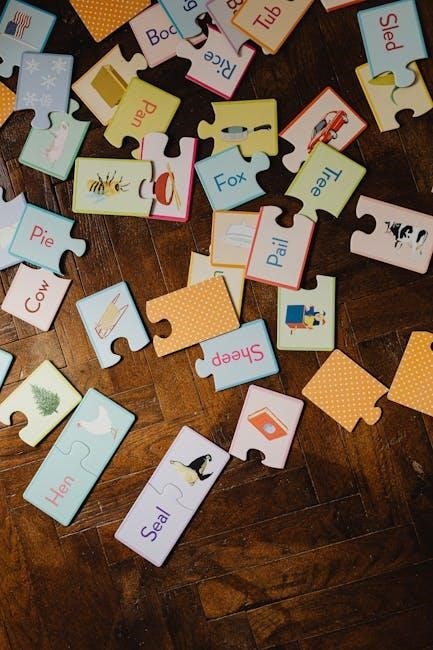
Phonics-Based Kindergarten Spelling Words
Decoding skills blossom with phonics. PDFs focusing on sound-letter relationships—CVC words‚ blends‚ digraphs—build spelling confidence. Structured lists aid systematic instruction and practice.
Short Vowel Sounds (CVC Words)
CVC (consonant-vowel-consonant) words form the bedrock of early phonics instruction. These simple words‚ like “cat‚” “dog‚” and “sun‚” allow children to practice blending sounds and applying the short vowel rules. A kindergarten spelling PDF dedicated to CVC words is an invaluable tool for both teachers and parents.
Effective PDFs will categorize words by vowel sound – short ‘a’ (hat‚ map‚ tap)‚ short ‘e’ (bed‚ hen‚ red)‚ short ‘i’ (pig‚ fin‚ lip)‚ short ‘o’ (dog‚ hop‚ top)‚ and short ‘u’ (sun‚ cup‚ run). Lists should progress in complexity‚ starting with easily decodable words and gradually introducing more challenging combinations.
Beyond simple lists‚ a well-designed PDF might include accompanying activities. These could involve picture matching‚ fill-in-the-blank exercises‚ or even simple sentence construction using the CVC words. The goal is to reinforce the connection between sounds‚ letters‚ and meaning. Remember‚ consistent practice with these foundational words builds a strong base for future spelling success. Utilizing a PDF allows for focused‚ repeatable practice‚ essential for mastering these core skills.
Beginning Consonant Blends (bl‚ br‚ cl‚ etc.)
Introducing consonant blends – where two or more consonants are blended together‚ but each sound is still heard – marks a crucial step in kindergarten spelling development. Common blends include ‘bl’ (blue‚ black)‚ ‘br’ (brown‚ bring)‚ ‘cl’ (clap‚ cloud)‚ ‘cr’ (crab‚ cry)‚ ‘dr’ (drum‚ dress)‚ ‘fl’ (flag‚ flip)‚ ‘fr’ (frog‚ friend)‚ ‘gl’ (glass‚ glad)‚ ‘gr’ (green‚ grape)‚ ‘pl’ (play‚ plan)‚ ‘pr’ (present‚ proud)‚ ‘sl’ (sleep‚ slide)‚ ‘sp’ (spoon‚ spot)‚ and ‘st’ (stop‚ star).
A dedicated kindergarten spelling PDF focusing on blends should present words systematically. Start with one blend at a time‚ providing ample practice before introducing another. Visual aids‚ like pictures accompanying each word‚ are incredibly helpful.
Effective PDFs will move beyond simple recognition. Include activities like blending sound boxes (where children fill in the missing blend)‚ word sorts (categorizing words by blend)‚ and sentence writing. The focus should be on decoding and encoding – both reading and spelling words with blends. Consistent exposure and targeted practice within a structured PDF format will solidify understanding and build confidence.
Ending Consonant Blends (st‚ nd‚ nt‚ etc.)
Mastering ending consonant blends – combinations like ‘st’ (last‚ best)‚ ‘nd’ (hand‚ find)‚ ‘nt’ (went‚ ant)‚ ‘mp’ (jump‚ camp)‚ ‘nk’ (pink‚ bank)‚ ‘lt’ (felt‚ salt)‚ ‘pt’ (kept‚ slept)‚ and ‘sk’ (ask‚ desk) – builds upon foundational phonics skills. These blends often present a unique challenge as children must accurately identify and pronounce the final sounds.
A well-designed kindergarten spelling PDF for ending blends should prioritize a gradual introduction. Begin with blends that are visually and auditorily distinct. For example‚ ‘st’ is easier to differentiate than ‘nt’.

Effective PDF resources will incorporate multi-sensory activities. Include picture matching‚ fill-in-the-blank exercises‚ and opportunities for students to create their own sentences using blend words. Consider incorporating a “blend and read” section where children decode words containing the target blend. Repetitive practice within a structured PDF‚ coupled with engaging activities‚ is key to successful mastery of these crucial spelling patterns.
Digraphs (sh‚ ch‚ th‚ wh)
Introducing digraphs – letter combinations that create a single sound‚ such as ‘sh’ (ship‚ shell)‚ ‘ch’ (chip‚ chair)‚ ‘th’ (thin‚ that)‚ and ‘wh’ (what‚ when) – significantly expands a kindergartener’s phonetic repertoire. These combinations often deviate from simple sound-letter correspondence‚ requiring focused attention and practice.
A comprehensive kindergarten spelling PDF focusing on digraphs should present them systematically. Start with digraphs that are easily distinguishable‚ like ‘sh’ and ‘ch’‚ before moving to more subtle sounds like ‘th’. Visual cues‚ like associating ‘sh’ with a quiet signal (shhh!)‚ can be beneficial.
Effective PDF resources will include a variety of exercises: identifying digraphs within words‚ circling pictures that begin with a specific digraph‚ and completing words with missing digraphs. Consider incorporating minimal pair activities (ship/sip) to highlight the difference in sound. Consistent reinforcement through engaging PDF activities will solidify digraph recognition and spelling skills.

Creating & Utilizing Kindergarten Spelling PDFs
PDFs empower focused learning. Easily printable lists and activities support both home and classroom instruction‚ offering convenient‚ structured practice for emerging spellers.
Free Printable Kindergarten Spelling Lists
Accessing readily available‚ no-cost kindergarten spelling lists in PDF format is incredibly beneficial for parents and teachers alike. Numerous websites dedicate resources to early childhood education‚ offering downloadable lists categorized by skill level and phonics concepts. These lists typically focus on high-frequency words and simple CVC (consonant-vowel-consonant) words‚ providing a solid foundation for beginning spellers.
The advantage of free PDFs lies in their convenience and adaptability. You can print multiple copies for classroom use‚ send them home for extra practice‚ or laminate them for durability. Many lists are designed with visual cues and engaging fonts to capture a child’s attention. Searching online using keywords like “kindergarten spelling list PDF‚” “free printable spelling words‚” or “early literacy PDFs” will yield a wealth of options.
However‚ it’s crucial to preview the lists before use to ensure they align with your curriculum and the specific needs of your students. Consider the scope and sequence of phonics skills being taught and select lists that reinforce those concepts. Remember to supplement these lists with interactive activities and games to make learning fun and effective.
Websites Offering Kindergarten Spelling Word PDFs
A plethora of online platforms provide downloadable kindergarten spelling word PDFs‚ catering to diverse learning styles and educational approaches. Education.com boasts a comprehensive collection‚ categorized by theme and skill‚ including sight words and phonics patterns; K5 Learning offers free worksheets and spelling lists‚ adaptable for both classroom and home use.
Super Teacher Worksheets is another valuable resource‚ providing a wide range of printable materials‚ including spelling tests and practice activities. Twinkl‚ while often subscription-based‚ offers a selection of free spelling resources‚ including PDF lists and accompanying games. AllKidsNetwork provides themed spelling lists and printable activities‚ making learning engaging for young children.
Furthermore‚ many educational blogs and teacher resource websites curate free spelling lists. A simple Google search using keywords like “kindergarten spelling PDF free” will reveal numerous options. Always verify the source’s credibility and ensure the content aligns with established educational standards before utilizing these resources. Remember to preview the PDFs to confirm suitability for your specific needs.
How to Effectively Use Spelling PDFs at Home
Maximizing the benefit of kindergarten spelling PDFs requires a structured and engaging approach. Start with short‚ focused sessions – 10-15 minutes daily is often sufficient. Prioritize multi-sensory learning; have your child say the letters aloud‚ trace them with their finger‚ and write them on paper or in sand.
Incorporate games like spelling bingo or word hunts using the PDF lists. Break down words into individual sounds (phonemes) to aid decoding and spelling. Focus on sight words – frequent repetition is key for memorization. Celebrate successes and offer encouragement‚ fostering a positive learning environment.
Regularly review previously learned words to reinforce retention. Adapt the activities to your child’s learning style; some children benefit from visual aids‚ while others prefer kinesthetic activities. Consistency is crucial; establish a routine to make spelling practice a regular part of your child’s day. Remember to keep it fun and avoid pressure!
Integrating PDFs into Kindergarten Classroom Activities
Leveraging kindergarten spelling PDFs within the classroom unlocks diverse learning opportunities. Utilize whole-group instruction by projecting the PDF and collaboratively sounding out words. Small-group activities allow for targeted practice based on individual needs‚ using differentiated PDF lists.
Create learning centers focused on specific spelling skills‚ incorporating PDF word cards for matching games or building activities. Integrate PDFs into writing workshops‚ encouraging students to use learned words in their sentences. Employ interactive whiteboards to annotate and manipulate PDF content during lessons.
Implement “word of the week” activities centered around a PDF spelling word‚ fostering consistent exposure. Utilize PDFs for assessment‚ tracking student progress and identifying areas for support. Encourage peer tutoring‚ where students assist each other with spelling practice using the PDFs. Remember to make learning playful and engaging!
Addressing Common Spelling Challenges
Early intervention is key. PDFs can target reversals (b/d‚ p/q) with focused practice. Support sounding-out skills through phonics-based PDF lists‚ building confidence and accuracy.
Letter Reversals (b/d‚ p/q)
Letter reversals are a remarkably common challenge for kindergarteners learning to spell and write. These aren’t indicators of learning difficulties‚ but rather a typical stage in visual discrimination development. Children are still solidifying their understanding of how letters should visually appear‚ and their brains sometimes “flip” them. A kindergarten spelling words PDF can be specifically designed to address this.
Effective PDFs will include dedicated practice pages focusing on the problematic letter pairs – b and d‚ and p and q. These pages shouldn’t just involve writing the letters in isolation. Instead‚ incorporate them within simple CVC (consonant-vowel-consonant) words like “bed‚” “dab‚” “pop‚” and “quip.”
Visual cues are incredibly helpful. PDFs can utilize arrows indicating the “belly” of the ‘b’ and the ‘d’‚ or highlight the “hat” on the ‘p’ and ‘q’. Multi-sensory activities‚ suggested alongside the PDF‚ can reinforce learning. For example‚ having children form the letters with playdough or trace them with their fingers. Consistent‚ gentle practice‚ utilizing targeted PDF exercises‚ will help children overcome these reversals and build confidence in their spelling abilities.
Sounding Out Words – Strategies & Support
Phonemic awareness – the ability to hear and manipulate sounds – is crucial for kindergarten spelling success. A well-designed kindergarten spelling words PDF should actively support this skill. Instead of simply presenting words for memorization‚ PDFs should emphasize breaking down words into their individual sounds (phonemes).
Strategies within the PDF can include “sound boxes” where children write a letter for each sound they hear in a word. For example‚ for “cat‚” they’d write ‘c’‚ ‘a’‚ and ‘t’ in separate boxes. Elkonin boxes are another effective tool. PDFs can also feature words segmented with slashes (c/a/t) to visually represent the sounds.
Supportive PDFs will offer gradual progression‚ starting with simple CVC words and slowly introducing consonant blends and digraphs. Providing audio pronunciations alongside the written words is invaluable. Encourage children to “stretch out” the sounds as they spell‚ and offer positive reinforcement for effort‚ not just accuracy. Remember‚ sounding out is a skill that develops over time with consistent practice and targeted support from these resources.
Dealing with Spelling Difficulties – Early Intervention
Early identification of spelling challenges is paramount in kindergarten. A thoughtfully curated kindergarten spelling words PDF can aid in this process by including observational checklists for educators and parents. These checklists might highlight consistent letter reversals (b/d)‚ omitting sounds‚ or difficulty with specific phonemes.
If difficulties emerge‚ intervention should be swift and focused. Utilize the PDF’s resources – segmented words‚ sound boxes – for targeted practice. Multi-sensory approaches are highly effective; incorporate tactile activities like writing words in sand or using playdough to form letters.
Don’t hesitate to consult with school specialists (reading specialists‚ special education teachers) if challenges persist. A PDF can serve as a valuable communication tool‚ showcasing specific areas of difficulty. Remember‚ early intervention isn’t about “fixing” a problem‚ but providing the necessary support to build a strong foundation for future literacy success. Consistent‚ individualized practice is key‚ leveraging the PDF’s adaptable exercises.
Beyond the PDF: Additional Resources
Extend learning beyond printable lists! Explore interactive spelling games and apps. Engaging books reinforce concepts. These supplemental tools build confidence and solidify spelling skills effectively.
Online Spelling Games for Kindergarten
Interactive digital platforms offer a dynamic approach to kindergarten spelling practice‚ moving beyond traditional worksheets and PDFs. These games transform learning into an enjoyable experience‚ captivating young learners and boosting engagement. Many websites provide free‚ age-appropriate games specifically designed to reinforce sight words and phonics skills.
Popular options often include drag-and-drop activities where children match letters to sounds‚ or build words from scrambled letters. Some games feature animated characters and reward systems‚ motivating children to continue practicing. Look for games that focus on CVC (consonant-vowel-consonant) words‚ beginning blends‚ and digraphs – key components of early spelling development.
Benefits extend beyond simple memorization. Games encourage active recall‚ improve hand-eye coordination‚ and foster a positive attitude towards learning. They also provide opportunities for individualized practice‚ allowing children to work at their own pace and focus on areas where they need extra support. Regularly incorporating these games into a learning routine can significantly enhance a child’s spelling proficiency and build a strong foundation for future literacy success. Remember to supervise screen time and choose reputable‚ educational websites.
Kindergarten Spelling Apps
Mobile applications present a convenient and engaging way to supplement kindergarten spelling instruction‚ complementing PDF-based learning resources. These apps often leverage gamification‚ turning spelling practice into an interactive adventure for young children. Many are designed with bright visuals‚ cheerful sounds‚ and positive reinforcement to maintain motivation.
Features commonly found in these apps include voice recordings to aid pronunciation‚ personalized learning paths that adapt to a child’s skill level‚ and progress tracking for parents and educators. Apps frequently focus on sight word recognition‚ phonics skills (like short vowel sounds and consonant blends)‚ and building simple CVC words.
The portability of apps allows for learning on-the-go‚ transforming travel time or quiet moments into valuable educational opportunities. While some apps are free with limited content‚ others offer subscription-based access to a wider range of activities and features. When selecting an app‚ prioritize those with positive reviews‚ age-appropriate content‚ and a focus on foundational spelling skills. Integrating app-based learning alongside traditional methods‚ like utilizing printable spelling lists‚ can create a well-rounded and effective learning experience.

Books to Support Kindergarten Spelling Development
Complementing PDF spelling lists and digital resources‚ carefully selected books can significantly bolster a kindergartner’s spelling journey. Look for books that emphasize phonemic awareness – the ability to hear and manipulate sounds in words – a crucial skill for decoding and spelling. Alphabet books focusing on letter sounds‚ rather than just names‚ are an excellent starting point.
Rhyming books are invaluable‚ as they highlight sound patterns and encourage children to predict words. Books featuring repetitive phrases and sight words reinforce recognition and build confidence. Early readers with simple sentences and predictable text provide opportunities for children to practice sounding out words and applying spelling skills.
Interactive books that encourage children to fill in missing letters or identify rhyming words further engage them in the learning process; Don’t underestimate the power of reading aloud! Exposure to rich language and diverse vocabulary expands a child’s understanding of how words work. Pairing book reading with PDF-based spelling practice creates a holistic and enjoyable learning experience‚ fostering a lifelong love of literacy.