Nikon Z7II Manual: A Comprehensive Guide
Nikon provides detailed user guides, including a 21.47 MB comprehensive manual and a 2.00 MB user guide, alongside web-based resources for the Z7II.
The Nikon Z7II is a full-frame mirrorless camera renowned for its high-resolution imaging capabilities. Numerous resources, including detailed user manuals (21.47 MB and 2.00 MB versions), are available to assist photographers. These guides cover everything from initial setup to advanced features, ensuring optimal performance.
Furthermore, Nikon offers web-based documentation and setting guides, particularly useful for features like N-Log for videographers. Firmware updates enhance functionality, and translated manuals cater to a global user base.
Understanding the Camera Body
The Nikon Z7II boasts a robust build, and understanding its physical layout is crucial. Detailed diagrams illustrate the rear view, showcasing the tilting LCD screen and controls. These visuals, found within the comprehensive user manual, aid in familiarization.
Nikon’s documentation emphasizes control placement for efficient operation. The camera’s design facilitates comfortable handling and access to key settings, enhancing the overall shooting experience for all users.
Front View and Controls
While specific details regarding the front controls aren’t explicitly detailed in the provided snippets, the comprehensive Nikon Z7II manual offers a thorough breakdown. Expect to find information on lens mounting, function buttons, and the microphone placement on the camera’s front panel.
Users can refer to the manual’s diagrams for precise identification of each component, ensuring a clear understanding of their functionality and contributing to seamless operation during photography sessions.
Rear View and Controls
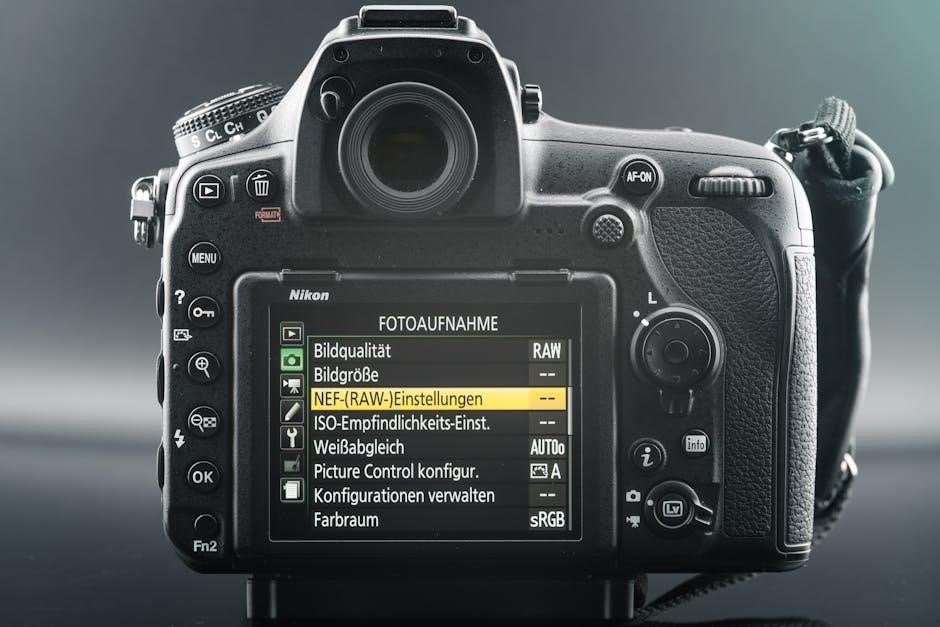
The Nikon Z7II’s rear panel, as illustrated in available resources, features a tilting LCD screen and various control elements. The comprehensive manual details each button’s function, including those for menu navigation, image playback, and autofocus point selection.
Users will find explanations of the controls’ customization options, allowing for a personalized shooting experience. Diagrams within the manual aid in identifying each component and understanding its role in camera operation.
Top View and Controls
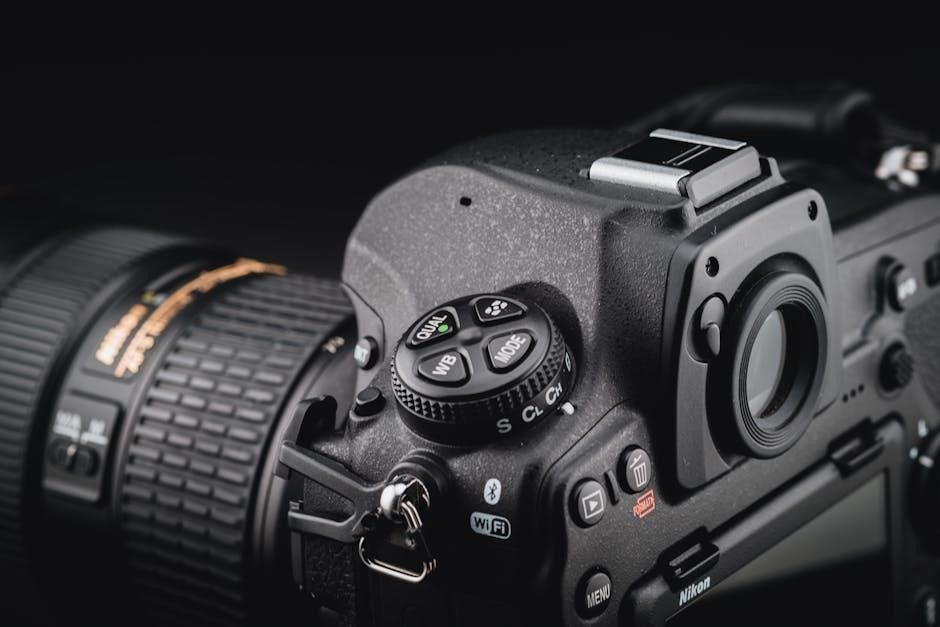
The Nikon Z7II’s top panel houses essential controls for shooting, as detailed in the provided manual. These include the main command dial, the exposure compensation dial, and the on/off switch with the shutter button. The manual thoroughly explains each control’s function and how they interact.
Users can customize certain top-panel functions for quicker access to frequently used settings, enhancing workflow efficiency. Diagrams illustrate the location of each control for easy identification.
Setting Up Your Nikon Z7II
Initial setup of the Nikon Z7II, as outlined in the manual, involves selecting the language, date, and time. The camera also prompts users to configure network settings for SnapBridge connectivity. Detailed instructions guide users through each step of the process, ensuring a smooth start.
The manual emphasizes the importance of customizing the menu and button assignments to match individual shooting preferences, maximizing efficiency and control.
Initial Camera Setup
The Nikon Z7II’s initial setup, detailed in the manual, begins with language selection and date/time configuration. Network settings are crucial for SnapBridge, enabling wireless image transfer. The camera guides users through these steps, ensuring a straightforward process.
Users are prompted to set up shooting preferences and customize display settings during this phase, tailoring the camera to their specific needs for optimal performance from the start.
Menu Navigation and Customization
The Nikon Z7II’s menu system, explained in the manual, allows extensive customization. Users can personalize settings across various menus – shooting, display, setup, and more. This enables tailoring the camera to individual shooting styles and preferences.
Understanding menu hierarchies is key to efficient operation. The manual details each option, facilitating a personalized experience and maximizing the camera’s capabilities for each user.
Button Customization
The Nikon Z7II manual details extensive button customization options, empowering users to assign functions to various controls. This allows for a highly personalized shooting experience, optimizing workflow for individual needs and preferences.
Users can re-define button roles, placing frequently used settings within easy reach. This customization streamlines operation, reducing menu navigation and enhancing responsiveness during critical shooting moments, as described in the provided guides.
Shooting Modes and Settings
The Nikon Z7II manual thoroughly explains diverse shooting modes, contrasting Auto Mode’s convenience with the full creative control of Manual Mode. It details Aperture Priority, Shutter Priority, and Program modes, outlining their specific applications and benefits for various photographic scenarios.
Users can leverage these modes to master exposure, achieving desired depth of field and motion blur. The manual guides photographers through understanding each setting’s impact on the final image, fostering a deeper understanding of photographic principles.
Auto Mode vs. Manual Mode
The Nikon Z7II manual clearly delineates the differences between Auto and Manual modes. Auto Mode prioritizes simplicity, letting the camera determine optimal settings for the scene, ideal for beginners or quick snapshots. Conversely, Manual Mode grants complete control over aperture, shutter speed, and ISO.
This empowers experienced photographers to realize their artistic vision, but requires a solid grasp of exposure principles. The guide emphasizes that mastering Manual mode unlocks the Z7II’s full potential.
Aperture Priority Mode
The Nikon Z7II manual details Aperture Priority mode (A or Av), where the photographer selects the desired aperture (f-stop) to control depth of field – crucial for isolating subjects or achieving landscape sharpness. The camera then automatically sets the shutter speed for proper exposure.
This mode balances creative control with convenience, allowing photographers to prioritize depth of field while the camera handles exposure. The manual highlights its usefulness for portraiture and landscape photography.
Shutter Priority Mode
The Nikon Z7II manual explains Shutter Priority mode (S or Tv), enabling photographers to choose a specific shutter speed to freeze motion or create motion blur – vital for sports or artistic effects. The camera automatically adjusts the aperture to achieve correct exposure;
This mode offers control over time, while the camera manages depth of field. The manual emphasizes its suitability for capturing fast-action sequences or intentionally blurring moving subjects for creative expression.
Program Mode
The Nikon Z7II manual details Program Mode (P), a versatile setting where the camera automatically selects both aperture and shutter speed for optimal exposure. However, it allows users to shift the program, altering the combination while maintaining the overall exposure value.
This mode provides a balance between automation and control, ideal for various shooting scenarios; The manual highlights its usefulness when quick adjustments are needed without manual aperture or shutter speed selection.
Focusing System
The Nikon Z7II manual extensively covers its advanced focusing system, detailing various autofocus modes for different subjects and shooting conditions. It explains manual focus operation for precise control when autofocus isn’t ideal.
Furthermore, the guide outlines different focus area modes, allowing users to select how the camera prioritizes focus points. Understanding these options is crucial for achieving sharp images consistently, as detailed within the comprehensive manual.
Autofocus Modes
The Nikon Z7II manual thoroughly explains the camera’s diverse autofocus modes, catering to various shooting scenarios. It details Single-point AF for stationary subjects, Dynamic-area AF for tracking moving objects, and Auto-area AF for general use.
Additionally, the guide covers 3D-tracking, ideal for unpredictable movement, and Wide-area AF for quickly acquiring focus. Mastering these modes, as described in the manual, is key to capturing sharp, in-focus images consistently.
Manual Focus Operation
The Nikon Z7II manual provides detailed instructions for precise manual focusing. It explains how to engage MF mode via the focus mode selector, allowing for complete control over focus ring adjustments. The guide emphasizes utilizing focus peaking, a visual aid highlighting in-focus areas, for enhanced accuracy.
Furthermore, it details magnification options within Live View, enabling critical focus confirmation. Mastering manual focus, as outlined in the manual, is crucial for specialized photography and situations where autofocus struggles.
Focus Area Modes
The Nikon Z7II manual thoroughly explains the various focus area modes available. These include Single-point AF, Dynamic-area AF, Wide-area AF (Auto-area), and 3D-tracking. Each mode caters to different shooting scenarios, from static subjects to fast-moving action.
The guide details how to select and customize these modes via the camera’s menu system, ensuring optimal autofocus performance. Understanding these options is key to achieving sharp, well-focused images consistently.
Image Quality and Settings
The Nikon Z7II manual dedicates significant attention to image quality settings. It covers resolution options, allowing photographers to choose image sizes suitable for various purposes, from web display to large prints. Detailed explanations of White Balance settings are provided, ensuring accurate color reproduction in diverse lighting conditions.
Furthermore, the manual explores Nikon’s Picture Control settings, enabling customized image styles directly within the camera, offering creative control over tone and color.
Resolution and Image Size
The Nikon Z7II manual thoroughly explains resolution options, crucial for balancing image detail and file size. Users can select from various settings to tailor output to their needs – smaller sizes for quick sharing, or maximum resolution for professional printing and extensive cropping.
The guide details how different image sizes impact storage capacity and processing demands, helping photographers optimize their workflow. Understanding these settings is key to maximizing the Z7II’s capabilities.
White Balance Settings
The Nikon Z7II manual dedicates significant attention to white balance, explaining its importance in achieving accurate color rendition. It details various presets – Auto, Daylight, Cloudy, Tungsten, and Fluorescent – alongside custom settings for precise control.
Users learn how to adjust white balance to counteract color casts caused by different lighting conditions, ensuring natural-looking images. The guide also covers fine-tuning options and storing preferred settings for consistent results.
Picture Control Settings
The Nikon Z7II manual thoroughly explains Picture Control settings, allowing users to customize the look of their images directly in-camera; Standard, Neutral, Vivid, and Monochrome presets are detailed, alongside options for adjusting sharpness, contrast, brightness, and saturation.
The guide demonstrates how to create and save custom Picture Controls tailored to specific shooting scenarios, ensuring consistent image styles. Users can fine-tune these settings to achieve their desired aesthetic without post-processing.
Video Recording Features
The Nikon Z7II manual details extensive video capabilities, covering resolution and frame rate options for diverse projects. It specifically addresses N-Log and various color profiles, crucial for professional workflows and color grading flexibility.
The guide explains available audio recording options, including microphone inputs and level adjustments. It also highlights the camera’s ability to record RAW video when utilizing specific firmware and external recorders, enhancing post-production control.
Video Resolution and Frame Rates
The Nikon Z7II manual thoroughly explains available video resolutions, including options for 4K UHD and Full HD, catering to various production needs. It details supported frame rates for each resolution, such as 24p, 25p, 30p, 60p, and 120p, offering creative control over motion.
The guide clarifies how these settings impact file size and recording time, assisting users in optimizing their workflow. It also notes potential limitations based on chosen recording formats and external recording devices.
N-Log and Color Profiles
The Nikon Z7II manual dedicates a section to N-Log, a flat color profile designed for extensive post-production grading, maximizing dynamic range and color information. It explains how N-Log differs from standard picture profiles and its benefits for professional videographers.
The guide details compatible software like DaVinci Resolve for optimal N-Log footage processing. It also covers other color profiles and settings, enabling users to achieve desired looks directly in-camera or during editing.
Audio Recording Options
The Nikon Z7II manual thoroughly explains the camera’s audio recording capabilities, detailing options for internal and external microphone connections. It covers settings for adjusting audio levels, choosing appropriate recording formats, and minimizing unwanted noise during video capture.
Users will find guidance on utilizing the camera’s built-in microphone, connecting external microphones via the microphone jack, and monitoring audio levels effectively. The manual also addresses potential audio issues and troubleshooting tips.
Connectivity and Transferring Images
The Nikon Z7II manual details various connectivity options for seamless image transfer. It explains utilizing Wi-Fi and Bluetooth for connecting to smartphones and tablets via the Nikon SnapBridge application, enabling remote control and quick image sharing.
Furthermore, the manual provides clear instructions on establishing a direct connection to a computer using a USB cable for efficient file transfer and camera control. Users can find guidance on setting up these connections and troubleshooting common issues.
Wi-Fi and Bluetooth Connectivity
The Nikon Z7II manual thoroughly explains establishing Wi-Fi and Bluetooth connections. It details pairing the camera with smartphones and tablets, enabling image transfer and remote camera operation through the Nikon SnapBridge application.
Users will find step-by-step instructions for configuring network settings, troubleshooting connection problems, and optimizing transfer speeds. The manual also clarifies the differences between Wi-Fi and Bluetooth functionalities, assisting users in selecting the appropriate method for their needs.
Using the Nikon SnapBridge App
The Nikon Z7II manual dedicates a section to the SnapBridge app, detailing its features for seamless image transfer and remote control. Users learn how to pair their camera, automatically transfer photos to smartphones/tablets, and utilize remote live view shooting.
The guide explains navigating the app’s interface, customizing transfer settings, and troubleshooting common connectivity issues. It also covers utilizing SnapBridge for location data tagging and accessing Nikon’s cloud services, enhancing the overall photography workflow.
Connecting to a Computer via USB
The Nikon Z7II manual thoroughly explains connecting the camera to a computer using a USB cable for image transfer and software updates. It details the necessary drivers and software installation procedures for both Windows and macOS operating systems.
Users will find instructions on selecting the correct USB connection mode (MSC or MTP) for optimal transfer speeds and compatibility. The guide also addresses troubleshooting potential connection problems and ensuring stable data transfer for efficient workflow.
Advanced Features
The Nikon Z7II manual delves into advanced functionalities, including detailed instructions for performing firmware updates to ensure optimal camera performance and access to the latest features. It explains utilizing the electronic viewfinder (EVF) effectively, covering customization options and display settings.
Furthermore, the guide provides comprehensive information on in-camera RAW processing, allowing users to refine images directly on the camera before transferring them to a computer for further editing.
Firmware Updates
The Nikon Z7II manual emphasizes the importance of keeping your camera’s firmware up-to-date for peak performance and new capabilities. It details the process of downloading the latest firmware from the Nikon website and transferring it to the camera via memory card.
Step-by-step instructions are provided, ensuring a smooth update process, and highlighting precautions to avoid interruption during installation. Regular updates unlock enhanced features and address potential issues.
Using the Electronic Viewfinder
The Nikon Z7II manual thoroughly explains the benefits and customization options of its high-resolution electronic viewfinder (EVF). It details how to adjust brightness, color, and display information within the EVF to suit individual preferences and shooting conditions.
Users learn to utilize features like focus peaking and zebra stripes directly within the viewfinder for precise control, enhancing the overall shooting experience and image quality.
In-Camera RAW Processing
The Nikon Z7II manual guides users through the camera’s robust in-camera RAW processing capabilities. It details how to adjust exposure, white balance, and picture control settings directly on the camera, creating finished JPEG images from RAW files without needing a computer.
This feature streamlines workflow, offering quick editing options for immediate image sharing, while preserving the original RAW data for further refinement later.
Troubleshooting Common Issues
The Nikon Z7II manual addresses frequent problems like focusing difficulties and subpar image quality. It offers solutions for connectivity issues, guiding users through potential fixes for Wi-Fi and USB connections.
The guide provides systematic steps to diagnose and resolve these challenges, ensuring optimal camera performance. It emphasizes checking settings and performing basic troubleshooting before seeking further assistance.
Focusing Problems
The Nikon Z7II manual details troubleshooting for focusing issues, advising users to verify autofocus settings and selected focus area modes. It suggests checking lens compatibility and ensuring proper lens attachment.
If problems persist, the manual recommends cleaning the lens contacts and camera mount. Users are guided to experiment with different autofocus modes and consider manual focus as a diagnostic step, ensuring sharp images.
Image Quality Issues
The Nikon Z7II manual addresses image quality concerns by guiding users to review resolution and image size settings, ensuring optimal choices for their needs. It emphasizes the importance of correct white balance selection for accurate color rendition.
Furthermore, the manual details Picture Control settings, allowing customization of image characteristics. Users are advised to check for lens imperfections and consider in-camera RAW processing for enhanced detail and dynamic range.
Connectivity Problems
The Nikon Z7II manual offers troubleshooting steps for connectivity issues, focusing on Wi-Fi and Bluetooth connections. It instructs users to verify network settings and ensure the Nikon SnapBridge app is updated on their smartphone.
For USB connections, the manual advises checking cable integrity and computer compatibility. It suggests reinstalling drivers if necessary and consulting Nikon’s website for further support regarding software and firmware updates.
Maintenance and Care
The Nikon Z7II manual emphasizes regular cleaning of the camera body with a soft, dry cloth to remove dust and fingerprints. It advises against using harsh chemicals or solvents; Proper lens care, including using lens cleaning paper and fluid, is also detailed.
Battery management is crucial; the manual recommends removing the battery for extended storage and avoiding extreme temperatures to maximize its lifespan and performance.
Cleaning the Camera Body
The Nikon Z7II manual stresses using a soft, dry cloth to gently wipe the camera body, effectively removing dust, fingerprints, and smudges. Avoid applying excessive pressure. It explicitly cautions against the use of strong or abrasive cleaning agents, solvents, or liquids, as these can damage the finish;
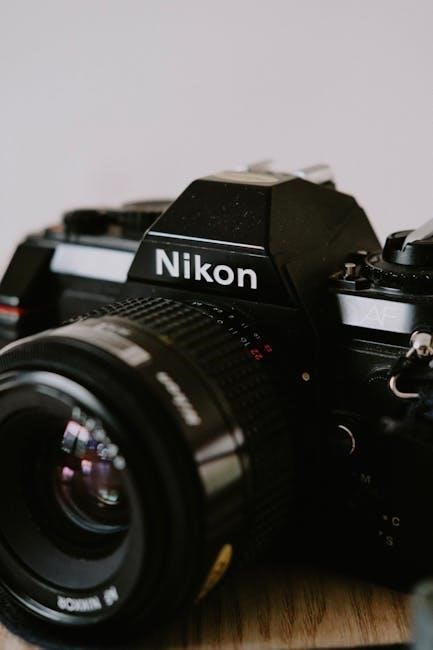
For stubborn dirt, lightly dampen the cloth with water, ensuring it’s wrung out thoroughly before use.
Lens Care
The Nikon Z7II manual advises using a blower to remove loose particles from the lens surface before cleaning. Employ a soft lens cleaning cloth, gently wiping in a circular motion from the center outwards. Avoid excessive pressure, which could scratch the coating.
Specifically, the manual discourages the use of strong solvents or abrasive cleaners. For persistent smudges, specialized lens cleaning fluid can be applied sparingly to the cloth, not directly onto the lens.

Battery Management
The Nikon Z7II manual stresses the importance of using only Nikon-approved batteries and chargers to prevent damage or malfunction. It recommends fully charging a new battery before initial use and storing batteries in a cool, dry place when not in use.
To maximize battery life, the manual suggests disabling features like Wi-Fi and Bluetooth when not needed, and utilizing the camera’s power-saving modes during extended shooting sessions.
Accessories for the Nikon Z7II
The Nikon Z7II manual highlights several recommended accessories to enhance the shooting experience. These include a selection of compatible NIKKOR lenses for various photographic needs, and an optional battery grip for extended shooting durations and improved ergonomics.
Additionally, the manual details the benefits of utilizing external flashes for more controlled and creative lighting, alongside links to other Nikon software and product manuals.
Recommended Lenses
The Nikon Z7II manual doesn’t explicitly list specific recommended lenses, but emphasizes compatibility with the entire NIKKOR Z lens lineup. Users are directed to Nikon’s broader resources for detailed lens information and selection guidance.
Choosing lenses depends on individual photographic needs, ranging from wide-angle options for landscapes to telephoto lenses for wildlife, all designed to maximize the Z7II’s full-frame sensor capabilities.
Optional Battery Grip
The Nikon Z7II manual details an optional battery grip designed to enhance usability during extended shooting sessions. This grip accommodates additional batteries, effectively doubling the camera’s power capacity and reducing downtime for battery swaps.
It also provides improved handling, particularly when using larger or heavier lenses, offering a more secure and comfortable grip. The manual highlights its benefits for professional photographers and enthusiasts alike.
External Flashes
The Nikon Z7II manual extensively covers compatibility with Nikon’s range of external flashes, detailing how to utilize them for advanced lighting control. It explains various flash modes, including TTL, manual, and commander modes, enabling photographers to achieve desired lighting effects.
The guide also outlines wireless flash control options, allowing for off-camera flash setups. Proper flash usage, as described, significantly enhances image quality and creative possibilities.